Skip to content

restaurant-reporting

2 posts with the tag “restaurant-reporting”

Toast export files explained: Item, Modifier, PMIX, Order, and Payment

Toast provides report downloads and configurable nightly data exports. The file names sound related, but each answers a different operational or financial question.

The problem

Spreadsheet errors often begin before a formula is written: the wrong file is used for the question. Product Mix is treated as row-level sales. Payment rows are joined directly to menu items. Modifier rows are stacked under item rows.

Start by naming the grain: what does one row represent?

Example Toast CSV columns

ExportOne row usually representsUseful examples
Item Selection DetailsOne menu-item selectionItem ID, date, item, quantity, net price
Modifier Selection DetailsOne modifier selectionParent item ID, modifier, quantity, value
Product MixAn item aggregate for a period or breakdownMenu, group, item, quantity, sales
Order DetailsOne orderOrder ID, opened/closed times, dining option
Payment DetailsOne paymentPayment ID, order/check ID, type, amount
MenuMenu configuration dataItem, group, identifiers, active state

Toast allows configured nightly exports to choose column names and order. Never assume every restaurant receives the same schema.

Which file should you use?

  • “What sold?” Start with Item Selection Details.
  • “Which add-ons were selected?” Add Modifier Selection Details.
  • “What is the item mix for a period?” Use Product Mix.
  • “How were orders opened, closed, or categorized?” Use Order Details.
  • “How was money tendered?” Use Payment Details.
  • “How is the menu configured?” Use Menu data.

When a question crosses grains, define the join and reconciliation before combining files.

Screenshot and demo
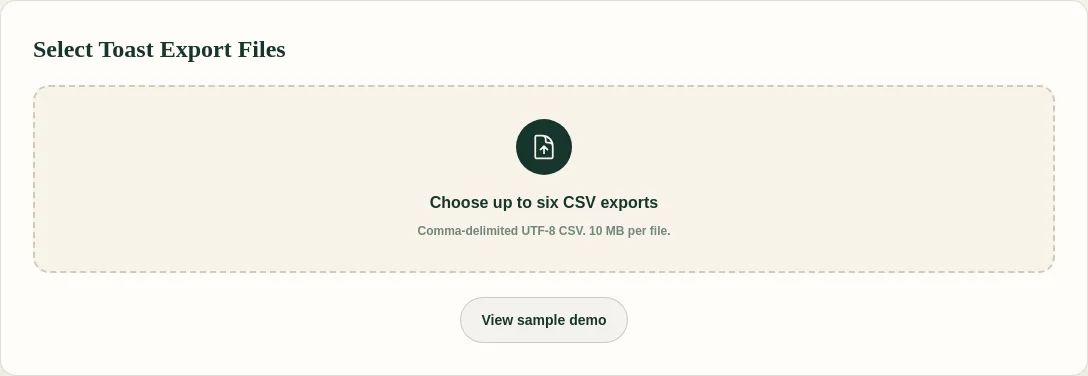
FoodSaver upload screen for supported Toast CSV exports

FoodSaver requires Item Selection for the clean item workbook. Other supported files are optional; Product Mix, Order, Payment, and Menu are currently preserved as sanitized source sheets rather than fully normalized semantics.

Free sample workbook

The sample files make the item-versus-modifier grain visible before you use restaurant exports.

Pricing

FoodSaver offers three free successful generations per UTC day within free limits. Pro costs $19/month or $190/year and adds larger files, history, saved mappings, email delivery, and 90-day retention.

See plan details.

Frequently asked questions

Are nightly exports the same as manual report downloads?

Toast says nightly data exports cover many of the same data types available from Toast Web, but configured columns and timing can differ.

Can I combine every export in one worksheet?

Use one workbook, not one undifferentiated table. Separate sheets preserve row grain and reduce accidental duplication.

Why does my coworker’s export have different columns?

Configured exports can choose column names and order. Report filters and versions can also affect downloads.

Which file does FoodSaver require?

Item Selection Details. Modifier Selection is optional but needed for item-modifier detail.
Sources

Next: compare Toast SFTP with manual CSV exports.

Try the free Toast Prep + OneCSV workbook generator.

How to avoid double-counting Toast modifier revenue in Excel

The Toast Prep workbook uses separate item and modifier views because the two exports answer different questions. Adding both views without a reconciliation rule can overstate sales.

Item rows record menu-item selections. Modifier rows record details attached to those selections. A workbook can count the same economic activity twice when it treats both sets of rows as independent sales.

A small numeric example

Assume the source data contains:

SourceRowAmount
Item SelectionBurger$10.00
Modifier SelectionExtra cheese$2.00

A correct check total might be $12.00. A bad workbook can accidentally add the $10 item total to a separate $12 item-with-modifier total and report $22.00.

The safe review keeps the base item result and modifier detail in separate views, with a reconciliation rule that explains which values contribute to the total.

Start with item revenue

Build the base sales total from Item Selection first. This gives you one stable item-level review before modifiers enter the workbook.

At this stage, check:

  • total item sales;
  • discounts;
  • refunds or voids;
  • unusual zero or negative values;
  • missing menu item names;
  • rows outside the expected period.

Confirm how the export represents modifier values before adding them to the base total.

If you are unsure which file should provide the base grain, start with Item Selection vs Modifier Selection.

Treat modifier rows as detail first

Modifier Selection is best reviewed as detail attached to item rows.

Useful questions include:

  • which modifiers were selected most often;
  • which items receive the most modifiers;
  • whether modifiers are paid, included, or informational;
  • which modifiers cannot be matched to an item.

Those operational questions can use modifier counts and attachment detail without creating a second revenue total.

Excel and PivotTable warning

Keep item revenue and modifier detail in separate PivotTables. Use the modifier table for frequency and attachment analysis, then reconcile paid modifiers through a documented formula.

Join only by exact item selection ID

A modifier should attach to an item only when the parent item selection ID is exact and unique.

Avoid fuzzy matching by:

  • item name;
  • check number alone;
  • timestamp alone;
  • row order;
  • menu group.

Those fields may help a human review an exception, but they are not safe join keys for an automated workbook.

Matching methodSafe for automatic joins?Why
Exact unique parent item selection IDYesTraceable to one item row
Item nameNoThe same item appears many times
TimestampNoMultiple selections can share a timestamp
Row orderNoExport order can change
Check number aloneNoOne check contains multiple items

Keep a separate modifier detail sheet

A clean workbook can include two useful views:

  • an item summary with modifier information included once;
  • a modifier detail sheet with one row per item-modifier relationship.

The modifier detail sheet should warn reviewers not to sum it blindly with the item summary. It exists for analysis and audit, not as a second sales total.

Show unmatched modifiers

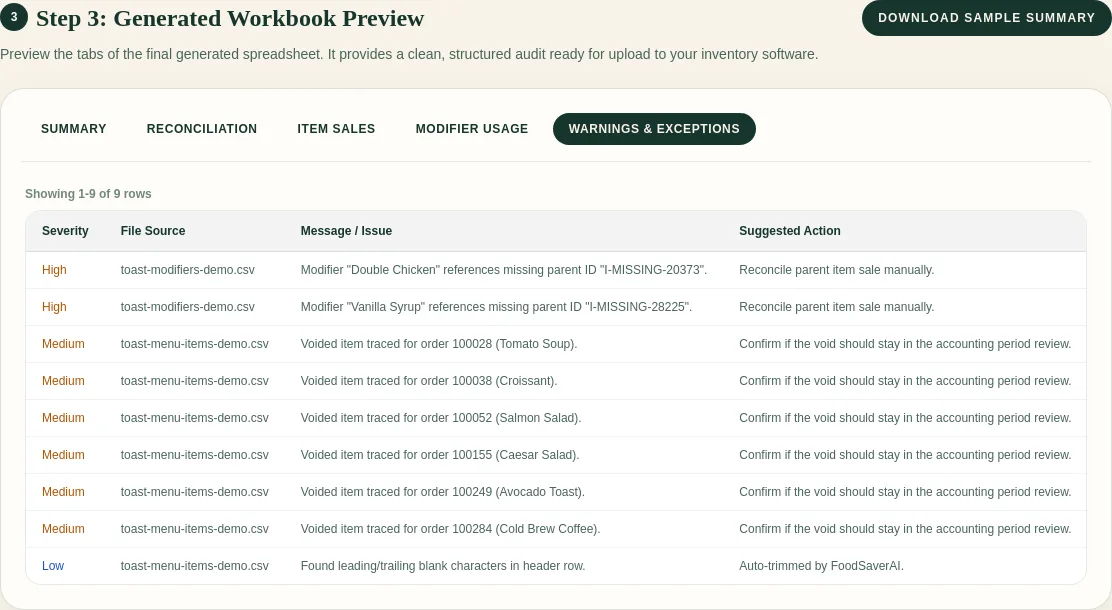
Put unmatched modifiers in an exception sheet with the source file and row number.

That gives the bookkeeper or operator a clear next step:

  1. Check whether the source export is complete.
  2. Confirm the date range.
  3. Review the parent selection ID.
  4. Decide whether the row should be included manually.

FoodSaver workbook preview showing unmatched parent IDs and voided rows in the Warnings and Exceptions tab

FoodSaver puts these rows in the workbook with their source references so the bookkeeper can resolve them before sending the report.

Frequently asked questions

Is every modifier amount already included in the item amount?

Toast report settings and exported columns can vary. Review the item and modifier amount fields before choosing a reconciliation formula.

Can I match an unmatched modifier by item name?

Use the name to investigate, not as an automatic join key. The same menu item can appear many times in one period.

What should I send to the owner?

Send the item-level summary, a short exception count, and the modifier detail needed for the question at hand. Label each table so the owner knows which figures contribute to the sales total.

Continue with the weekly Toast sales review checklist or review your exports in FoodSaver.